Email is a strange little love story. At some point, a subscriber cared enough to invite your brand into their inbox. But if they’ve stopped opening, clicking or engaging, the spark is fading. That silence isn’t just a shrug from your audience—it’s a warning sign for your sender reputation.
A smart re-engagement strategy gives you the chance to win them back—or gracefully say goodbye before they drag down your deliverability. Think of it as a relationship reset: respectful, relevant and rooted in what your subscribers actually want (even though they may not know it).
{{deliver-more="/blog-ctas"}}
Here’s the TL;DR
Inactive subscribers drag down your deliverability and your results. This guide shows you:
- How to re-engage respectfully (with campaigns that don’t scream desperation)
- When to win back with offers
- When to sunset subscribers for good
You’ll learn how to prep your list, automate re-engagement, avoid costly mistakes and use Inbox Monster’s data to measure whether it’s working.
Ghosted? Here’s Why Re-Engagement Matters
Before we get into the tactics, let’s ground ourselves in the “why.” Re-engagement isn’t just about coaxing people back—it’s about protecting your ability to reach the subscribers who are still listening. Inactive contacts are more than wasted space. They’re a risk.
Inactive subscribers are hurting your deliverability
When a big chunk of your list ignores you, internet service providers (ISPs) take note. Gmail, Yahoo, Microsoft—they all watch engagement signals to decide whether your emails land in the inbox or the spam folder.
Better engagement doesn’t just protect your deliverability—it pays. One case study found that by focusing solely on engaged subscribers, a brand grew revenue by 50% while sending 70% fewer emails. That kind of ROI turns inbox placement from a technical metric into a business win.
The signs it’s time to re-engage (before it’s too late)
Don’t wait until your open rates flatline. Warning signs include:
- A dip in click-through rates month over month
- Growing spam complaint rates
- Lower inbox placement in Gmail or Outlook (hint: run deliverability tests to spot this early)
Engagement = inbox placement: here’s why
Inbox providers treat inactivity like a signal of disinterest. If enough people ignore your emails, your whole program can be throttled or filtered to spam. Engagement is a core deliverability metric.
Re-Engagement, Win-Back, and Sunset: Clearing the Air
You may have heard marketers often use these terms interchangeably, but they each serve a distinct purpose in your lifecycle strategy. Let’s set some definitions so you know which one to use, and when.
Re-Engagement 🤝
This is the broad effort to wake up inactive subscribers. Think of it as the nudge: “Hey, you signed up for this—do you still want in?” Re-engagement campaigns often test subject lines, highlight value, and encourage preference updates.
Win-Back 🥇
A more specific form of re-engagement aimed at lapsed customers. These campaigns usually include an incentive—like a discount, free shipping, or a loyalty perk—to bring buyers back into the fold.
Sunset 🌇
The final step in the process. Sunset policies define when you remove or suppress unengaged subscribers for good. The goal isn’t to get clicks—it’s to protect your deliverability by cutting ties cleanly.
When you map your lifecycle strategy, think of these as stages in a funnel: re-engagement first, win-back for the promising ones and sunset for the true ghosts.
Before You Hit Send: Get Your List Ready
Great re-engagement campaigns don’t start with clever copy—they start with clean data. If you don’t know who’s inactive or if your list is full of risky addresses, no amount of witty subject lines will save you.
Identify who’s truly inactive
Start by defining inactivity. For some brands, that’s 30 days without an open or click. For others, it’s six months. The right cutoff depends on your email cadence and audience.
Segment like a human, not a robot
Not all inactive subscribers are the same. Someone who purchased three months ago but hasn’t opened lately is different from a contact who hasn’t clicked in a year. Tailor your messaging to each band of inactivity.
Clean up obvious bad addresses, spam traps or hard bounces
A healthy re-engagement campaign starts with list hygiene. Remove dead weight, like hard bounces, typo-ridden addresses or known spamtraps, before you even start. This improves your odds of landing in the inbox for the people worth winning back.
Re-Engagement Done Right: What Your Emails Need
Once your list is ready, the focus should shift to your messaging. This is your chance to strike the right tone: engaging but not desperate, personal but not creepy, clear without being pushy.
Subject lines that don’t scream, “We’re begging you”
Consistency matters, but re-engagement is the perfect time to test bold subject lines. Think:
- Personalization beyond the first name
- A dash of humor (“Was it something we said?”)
- Honest emotion (“We miss you around here”)
- Use emoji, if it fits your brand
- Ask an intriguing question
Run A/B tests to find what resonates with this less interested audience.
Copy that connects (and sets expectations)
Your message should be clear, simple and respectful. Remind subscribers why they signed up, highlight what’s new and set expectations for what comes next.
The magic of clear calls to action
There’s nothing worse than opening a re-engagement email with no clear direction on what you have to do. The best re-engagement emails make the next step effortless:
- “Stay subscribed” with a one-click button
- “Update your preferences” with a link to your preference center
- “Shop our latest” with a focused offer
Should you offer a discount, content or a heartfelt goodbye?
Not every brand should discount. Sometimes, exclusive content, an insider update or a friendly nudge is enough. And if someone still doesn’t bite? A goodbye message with the option to resubscribe later keeps the door open.
"If your customers aren't opening and interacting with your content, they're sending you a signal. Either they're no longer into it, and it's probably time to back off, or maybe they just forgot why they had that brand love in the first place. Re-engagement is exactly how you can find out, so you won't be that annoying person at the cocktail party who can't take a hint." ~ Laura Sullivan, Head of Brand & Marketing, Inbox Monster
Campaign Ideas That Don’t Feel Like a Last Resort
Re-engagement campaigns don’t have to feel like a last-ditch plea. When designed well, they can be a refreshing reminder for your subscribers on why they subscribed in the first place, as well as give you valuable insights into what still resonates. Here are a few approaches that balance honesty with creativity.
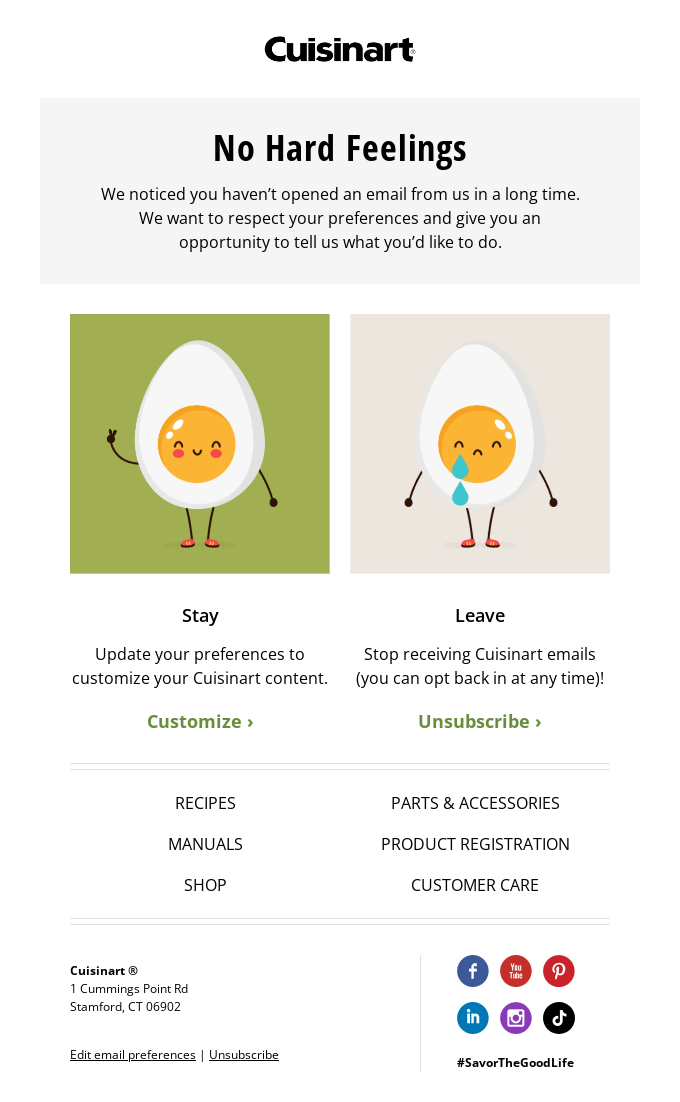
The “Still Want In?” campaign
This classic campaign gives subscribers a simple yes/no choice. The goal is to let them self-select without friction.
The “Pick What You Want to Hear About” approach
Often, disengagement isn’t about your brand—it’s about content overload. Letting people choose what they want to hear from you can reignite interest.
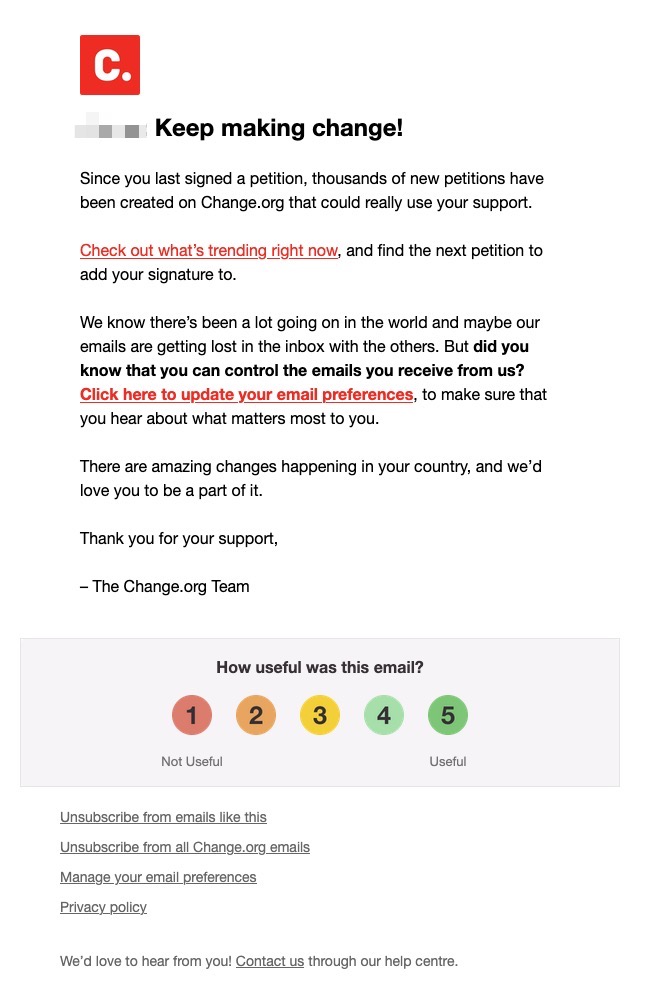
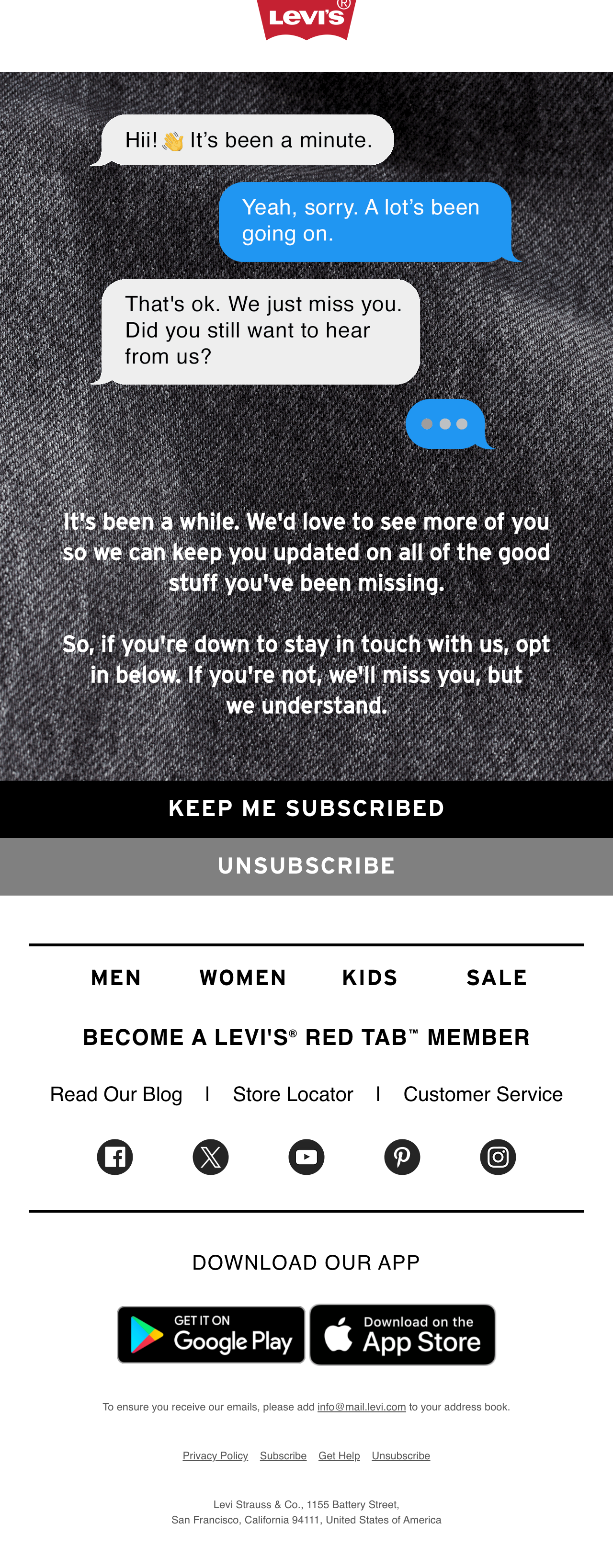
The “We Miss You (But It’s Cool If You’re Done)” send
Sometimes, honesty is the best policy. A friendly goodbye email acknowledges the subscriber’s silence but leaves the door open. It’s polite, respectful and can even create positive sentiment if they do unsubscribe.
Automating Your Re-Engagement Campaign
Re-engagement works best when it’s systematic, not sporadic. That’s why automation is your friend. It ensures that every subscriber has the same thoughtful experience, regardless of when they go quiet.
Why automation is the way to go
With automation, you don’t have to manually run campaigns every quarter. Instead, workflows automatically trigger reengagement emails after a set period of inactivity, whether that’s 30, 90 or 180 days. This consistency protects your deliverability without adding work to your calendar.
How to maintain an automated re-engagement campaign
Automation doesn’t mean “set it and forget it.” You’ll need to:
- Review performance quarterly (opens, clicks, unsubscribes, inbox placement)
- Refresh creative to avoid fatigue
- Adjust timing based on audience behavior
Think of automation as the safety net for your list health, but like any net, it needs regular checks for holes.
Should You Use a Separate Sending IP for Re-Engagement?
Re-engagement campaigns naturally target your least engaged subscribers: the ones most likely to ignore you, delete your emails or (worst case) smash that spam button. Reaching out can create additional risk to your reputation if you’re sending from your main marketing IP address.
Why a separate IP (or subdomain) helps
When you send from a different IP or a clearly defined subdomain, you create a buffer between your primary marketing traffic and your high-risk re-engagement traffic. This way:
- Your main IP stays safe. Even if engagement is low or spam complaints spike, your primary sending reputation isn’t dragged down.
- You can test with confidence. New subject lines, creative angles, or offers are safer to trial in this isolated environment.
Deliverability data is clearer. With a separate IP, it’s easier to analyze inbox placement, complaint rates, and engagement tied specifically to re-engagement.
When it’s worth doing
This isn’t a must for everyone. If your list is small or you run only occasional re-engagement pushes, a separate IP may be overkill—or may not even be available from ESPs that require shared IPs for certain-sized brands.
But for larger senders—especially anyone running regular re-engagement automations—it’s a smart investment in long-term deliverability health.
What to watch for
If you do set up a separate IP, remember that it will need warming (gradual volume ramp-up) just like any new sending IP. And don’t treat it like a dumping ground—you should still practice list hygiene, clear sunset policies and thoughtful campaign design. Otherwise, mailbox providers will spot bad behavior quickly.
{{demystify-deliverability="/blog-ctas"}}
When to Let Go: The Art of the Sunset Policy
At some point, you need to stop chasing ghosts. That’s where a sunset policy comes in—a clear, intentional plan for when to remove inactive subscribers from your list.
What is a sunset policy, and how does it protect your program?
A sunset policy ensures you’re not repeatedly emailing people who haven’t shown interest in months (or years). This protects your sender reputation, reduces the risk of spam complaints and boosts engagement metrics across the board.
How long is too long to keep someone who’s not engaging?
For most brands, 6–12 months of inactivity is the tipping point. Beyond that, the chances of reactivation drop sharply.
Do you really need to delete those contacts?
Not always. There are two options depending on your business and email program:
- Delete them outright: This is best if you want a clean list and improved deliverability.
- Suppress them: Keep them in your CRM for non-email targeting (like ads or direct mail) without sending to them.
If you’re in a regulated industry or want historical data for attribution, suppression often makes more sense than deletion.
Re-Engagement Mistakes to Avoid
Re-engagement is powerful, but if done wrong, it can backfire. These are the most common slip-ups and how to recover if you’ve already made them.
The non-stop re-engagement campaign
If you hit inactive subscribers over and over, they’ll get annoyed and mark you as spam. If you’ve already gone too far, stop immediately and give your list a cooldown period. Then reintroduce yourself with a fresh, respectful message.
Hiding the unsubscribe link (seriously, don’t)
This is one of the fastest ways to rack up spam complaints. If you’ve tried it, reverse course: make your unsubscribe link prominent and consider adding a preference center option to soften the exit.
Setting unrealistic expectations for a re-engagement campaign
Expecting 50% of your inactives to rejoin is setting yourself up for disappointment. If you’ve oversold the success internally, reframe the conversation. Focus on how list hygiene and improved inbox placement are still wins—even if your audience doesn’t flood back in.
How Inbox Monster Helps You Monitor, Measure and Improve
You don’t need to guess whether your re-engagement campaign is working. Inbox Monster gives you the real-time insights to know for sure:
- Inbox placement testing to check where your campaigns land
- Reputation monitoring across IPs and domains
- Spamtrap detection to spot risky addresses before they damage deliverability
You can re-engage with confidence, knowing your efforts are grounded in data, not hope.
Re-Engagement Is a Deliverability Power Move
Inactive subscribers aren’t dead weight—they’re a chance to learn, refine and reset. By treating disengaged contacts like a signal instead of a failure, you protect your reputation and improve overall performance.
The best re-engagement campaigns are about demonstrating to inbox providers that you run a clean and respectful program.
{{expert="/blog-ctas"}}
FAQ: Re-Engagement Campaigns and List Hygiene
How long should I wait before trying to re-engage someone?
Most brands try between 30–90 days of inactivity, but it depends on your email cadence.
What’s a good reactivation rate for a re-engagement campaign?
Expect lower engagement than business-as-usual sends. Industry data shows that 2–5% reactivation rates are typical.
Can I re-engage cold leads from 6+ months ago?
You can try, but success rates drop sharply. Beyond 12 months, most inactive subscribers are better candidates for suppression.
Do I have to delete or suppress unengaged subscribers?
Eventually, yes. A sunset policy ensures you’re not sending to addresses that hurt your deliverability.
Will removing inactive subcribers hurt my list size or reporting?
Your list may shrink, but your engagement rates and deliverability will improve—a healthier metric to show your boss.
What’s the difference between re-engagement, win-back, and sunset?
Re-engagement: Nudging inactive subscribers in an effort to reinvigorate their interest
Win-back: Targeted campaigns, often with offers or incentives, to lapsed customers
Sunset: The final removal (or suppression) of unengaged contacts